What is Cryptocurrency Mining? A Beginner’s Guide
Cryptocurrency mining: Unearthing digital gold in the 21st century
Ever heard of digital gold? Well, cryptocurrency mining is kind of like that! Instead of pickaxes and shovels, you're using computers to solve complex puzzles and unlock new units of digital currency. Intrigued? Let’s dig a little deeper, shall we?
What Exactly Is Cryptocurrency Mining?
At its core, cryptocurrency mining is the process of verifying and adding new transaction data to a blockchain, which is a public, distributed ledger. Think of it as confirming transactions and keeping the cryptocurrency network secure.
The Nitty-Gritty: How Mining Works
So, how does this digital magic actually happen? Miners use powerful computers to solve complex cryptographic puzzles. These puzzles are so tough that they require a lot of processing power. The first miner to solve the puzzle gets to add a new block of transactions to the blockchain and is rewarded with newly minted cryptocurrency. It's like a digital treasure hunt where the prize is more crypto!
Why Is Mining Important?
You might be wondering, "Why bother with all this computational heavy lifting?" Well, mining serves several crucial purposes:
- Verifying Transactions: Miners ensure that transactions are legitimate and prevent fraud.
- Securing the Network: The more miners there are, the more secure the network becomes, making it harder to attack.
- Creating New Coins: Mining is how new units of cryptocurrency are introduced into circulation.
The Tools of the Trade: Mining Hardware
If you’re thinking of jumping into the mining game, you'll need the right tools. Here's a quick rundown:
CPU Mining: The Old School Way
Back in the early days of Bitcoin, you could mine using your computer's central processing unit (CPU). However, as the difficulty of mining increased, CPU mining became too slow and inefficient. Imagine trying to dig a tunnel with a spoon – possible, but not very practical!
GPU Mining: A Step Up
Graphics processing units (GPUs) are much better suited for mining than CPUs. GPUs can perform many calculations simultaneously, making them significantly faster. Many early miners used GPUs to mine Bitcoin and other cryptocurrencies. It's like upgrading from a spoon to a shovel!
ASIC Miners: The Pros
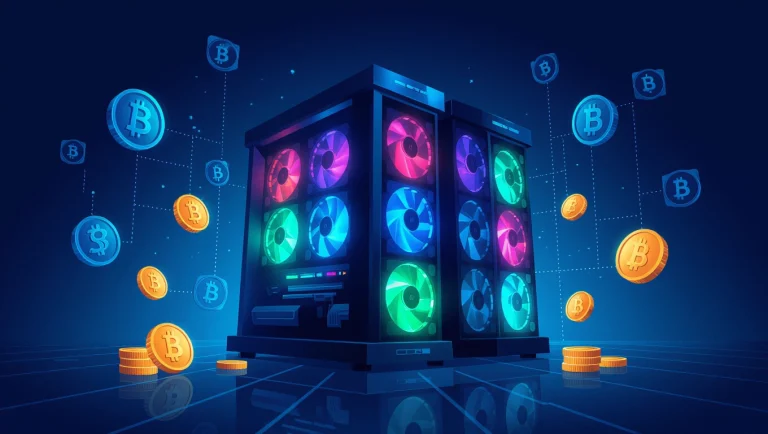
Application-specific integrated circuits (ASICs) are specialized hardware designed specifically for mining. These machines are incredibly powerful and efficient, but they can also be quite expensive. Think of ASICs as the heavy machinery of the mining world – powerful, but with a hefty price tag.
Here’s a quick comparison:
| Hardware | Speed | Efficiency | Cost |
|---|---|---|---|
| CPU | Slow | Low | Low |
| GPU | Faster | Medium | Medium |
| ASIC | Fastest | High | High |
Different Types of Mining
Not all mining is created equal. There are several different types of mining, each with its own unique characteristics.
Proof-of-Work (PoW)
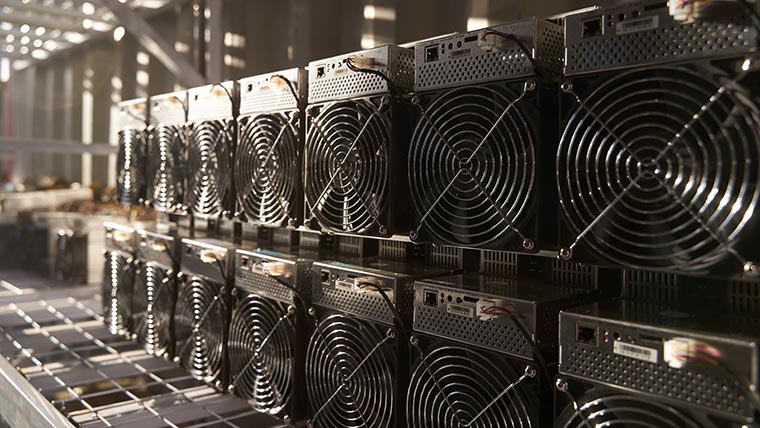
This is the original mining mechanism used by Bitcoin and many other cryptocurrencies. Miners compete to solve complex puzzles, and the winner gets to add the next block to the blockchain. PoW is known for its security but can be energy-intensive.
Proof-of-Stake (PoS)
Instead of solving puzzles, PoS relies on validators who "stake" their cryptocurrency to verify transactions. The more crypto you stake, the higher your chances of being chosen to validate a block and earn rewards. PoS is more energy-efficient than PoW but has its own set of trade-offs.
Cloud Mining
Don't want to deal with the hassle of buying and setting up mining hardware? Cloud mining might be for you! You essentially rent mining power from a data center and share in the profits. It's like renting a plot of land in a gold mine instead of buying the whole mine yourself.
The Environmental Impact of Mining
One of the biggest concerns about cryptocurrency mining is its environmental impact. PoW mining, in particular, can consume a lot of electricity, especially when using ASICs.
Energy Consumption
The energy consumption of Bitcoin mining has been a hot topic of debate. Some studies estimate that Bitcoin mining consumes as much energy as entire countries! However, there are efforts to make mining more sustainable by using renewable energy sources.
Sustainable Mining Practices
Many miners are now turning to renewable energy sources like solar, wind, and hydro power to reduce their carbon footprint. There's also research into more energy-efficient mining algorithms and hardware.
Is Mining Profitable?
Now for the million-dollar question: Can you actually make money mining cryptocurrency? The answer is: it depends.
Factors Affecting Profitability
Several factors can affect your mining profitability, including:
- Cryptocurrency Price: The higher the price of the cryptocurrency you're mining, the more you can earn.
- Mining Difficulty: The more miners there are, the harder it is to solve the puzzles, and the less you earn individually.
- Electricity Costs: Mining rigs consume a lot of electricity, so lower electricity costs can significantly increase your profits.
- Hardware Costs: The cost of mining hardware can eat into your profits, especially if you're buying expensive ASICs.
Calculating Mining Profitability
There are many online calculators that can help you estimate your mining profitability based on these factors. Just plug in your hardware specs, electricity costs, and the current price of the cryptocurrency, and you'll get an estimate of your potential earnings.
The Future of Cryptocurrency Mining
So, what does the future hold for cryptocurrency mining? Here are a few trends to watch:
The Rise of Sustainable Mining
As concerns about the environmental impact of mining grow, we're likely to see more and more miners adopting sustainable practices. This could include using renewable energy sources, developing more energy-efficient hardware, and exploring alternative consensus mechanisms like Proof-of-Stake.
The Evolution of Mining Hardware
Mining hardware is constantly evolving, with new and more powerful ASICs being developed all the time. We may also see the emergence of new types of mining hardware that are more energy-efficient and environmentally friendly.

The Impact of Regulatory Changes
Governments around the world are grappling with how to regulate cryptocurrency mining. Some countries have banned mining altogether, while others are exploring ways to tax or regulate it. Regulatory changes could have a significant impact on the future of mining.
Is Cryptocurrency Mining For You?
Mining can be a rewarding but also challenging endeavor. It requires technical knowledge, financial investment, and a willingness to stay up-to-date on the latest developments in the cryptocurrency world. If you’re ready to roll up your sleeves and dive into the world of digital gold, mining might just be your thing.
Frequently Asked Questions (FAQs)
1. What is a mining pool?
A mining pool is a group of miners who combine their computing power to increase their chances of solving a block and earning rewards. When a pool solves a block, the rewards are distributed among the miners based on their contribution.
2. Is mining Bitcoin still profitable?
Mining Bitcoin can still be profitable, but it depends on factors like the price of Bitcoin, mining difficulty, electricity costs, and hardware costs. With the increasing difficulty and competition, individual mining might not be as profitable as joining a mining pool or using more efficient hardware like ASICs.
3. Can I mine cryptocurrency on my phone?
While it's technically possible to mine cryptocurrency on your phone, it's generally not practical or profitable. Mobile devices have limited processing power and battery life, making them inefficient for mining. You're more likely to wear out your phone than to earn any significant amount of cryptocurrency.
4. What is the difference between mining and staking?
Mining and staking are both ways to earn rewards in the cryptocurrency world, but they work differently. Mining involves using computing power to solve complex puzzles and verify transactions, while staking involves holding and "staking" your cryptocurrency to support the network and earn rewards. Staking is generally more energy-efficient than mining.
5. How do I get started with cryptocurrency mining?
To get started with cryptocurrency mining, you'll need to do some research, acquire the necessary hardware (CPU, GPU, or ASIC), install mining software, and join a mining pool (optional). Be sure to consider factors like electricity costs, hardware costs, and mining difficulty before diving in.
6. What are the risks associated with cryptocurrency mining?
Cryptocurrency mining comes with several risks, including:
- Financial Risk: The cost of hardware and electricity can be significant, and there's no guarantee that you'll earn enough cryptocurrency to cover your expenses.
- Technical Risk: Mining requires technical knowledge and troubleshooting skills. You may encounter hardware or software issues that require expertise to resolve.
- Regulatory Risk: Governments around the world are still grappling with how to regulate cryptocurrency mining, and regulatory changes could impact your profitability.
Conclusion
Cryptocurrency mining is a fascinating and complex world, full of opportunities and challenges. Whether you're a seasoned techie or just curious about the inner workings of digital currencies, understanding mining can give you a deeper appreciation for the technology that's shaping the future of finance. So, are you ready to start digging for digital gold?
![How to Buy Cryptocurrency: A Beginner’s Guide [2026]](https://discoverydell.com/wp-content/uploads/2026/01/how-to-buy-cryptocurrency-featured-image-768x434.webp)