

NASA Artemis II Launch Pad: What’s Happening Now?
Get ready, space fans! The Artemis II mission is gearing up, and that means activity at the launch pad. Let's explore what's happening at the nasa artemis ii launch pad and what it means for the future of lunar exploration.
What's Happening at Launch Complex 39B?
Launch Complex 39B (LC-39B) at NASA's Kennedy Space Center in Florida is the place to watch. Why? Because it's the launch pad for the Artemis II mission! This is a big deal – it's the first crewed lunar mission since Apollo 17 back in 1972. After the Space Shuttle program ended, the pad was redesigned as a "clean pad." This means it has three lightning towers but doesn't have any of those big, permanent above-ground towers you might expect.
The Big Move: SLS and Orion to the Pad
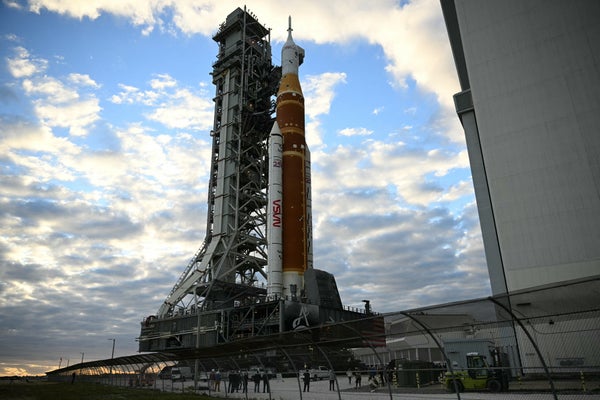
On January 17, 2026, something amazing happened. The Space Launch System (SLS) Block 1 rocket and Orion spacecraft stack, sitting on Mobile Launcher 1 (ML1), started its journey from the Vehicle Assembly Building (VAB) High Bay 3 to LC-39B. NASA reported that the first motion occurred at 7:04 a.m. EST (12:04 UTC).
How Far and How Long?
The trip was about 4 miles (nearly 7 km) along the crawlerway. It took around 11-12 hours, moving at a speed of about 1 mph. By 6:42 p.m. EST (23:42 UTC), the stack had arrived at the launch pad.
What's a Crawler-Transporter?
The vehicle that moved the rocket is called CT-2. When empty, it weighs a massive 6.6-6.65 million pounds, and it can carry up to 18 million pounds! To handle all that weight, the crawlerway is lined with smooth river rock. According to Astronomy.com, this is necessary to support the massive weight.
How Heavy Was the Whole Stack?
The entire stack weighed in at a staggering 11 million pounds. NASA confirmed this impressive figure.
Any Bumps Along the Way?
There were a few brief stops along the way due to some hardware issues. The crew access arm also had to be retracted. Before ML1 was lowered onto the pad over the 450-foot flame trench, CT-2 leveled the stack. According to reports, these adjustments were crucial for a smooth operation.
What Happens Next?
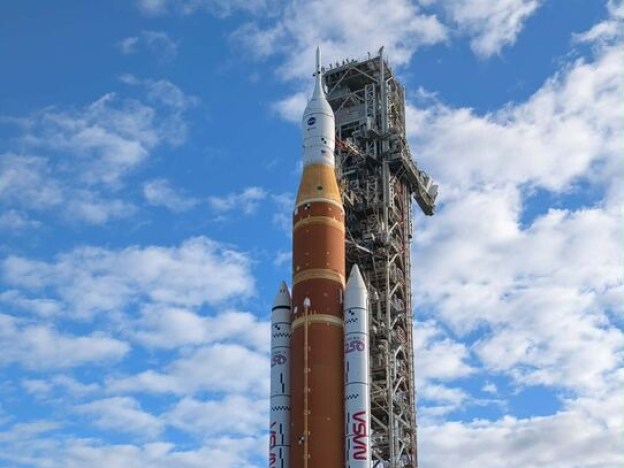
After arriving, workers are now connecting ML1 to the pad's infrastructure. Then, CT-2 heads back empty.
All About Launch Pad 39B
Let's get into the nitty-gritty details of Launch Pad 39B.
Where Is It and What's It Designed For?
LC-39B is part of the Kennedy Space Center. It's designed to support the SLS Block 1, which is a powerful rocket. Next Spaceflight notes that it has a rocket height of 98.1 meters, a liftoff thrust of 39,440 kN, and can carry a payload to low Earth orbit (LEO) of 95,000 kg.
What's a "Clean Pad"?
As mentioned earlier, Launch Pad 39B has a "clean pad" configuration. After the Shuttle era, it was redesigned with three lightning towers and without large fixed towers. Information from NASA Spaceflight emphasizes that this design focuses on having minimal permanent structures.
What About the Flame Trench?
Underneath the pad's center is a 450-foot-long flame trench. Its job is to divert the exhaust from the rocket during launch.
A Pad with a Past
This isn't the first time LC-39B has been used for important missions. It has hosted Apollo and Shuttle missions, and now it's ready for SLS missions.
Getting Ready for Launch
So, what happens at the pad before the launch?
Tests, Rehearsals, and More
After the rollout, teams will conduct integration, testing, and launch rehearsals. They'll also perform a wet dress rehearsal. This means they'll load the rocket with full propellant to make sure everything is ready for flight. Astronomy.com explains that this includes hooking up emergency systems.
Weather or Not: Rollout Criteria
Weather plays a big role in whether or not the rollout can happen.
What Conditions Stop a Rollout?
The rollout won't happen if certain weather conditions are present. NASA stated that the rollout is a no-go if:
- There's a greater than 10% chance of lightning within 20 nautical miles.
- There's a greater than 5% chance of hail.
- Sustained winds are greater than 40 knots, or peak winds are greater than 45 knots.
- The temperature is below 40°F or above 95°F.
Launch Details and Mission Goals
When can we expect the launch, and what's the mission all about?
When's the Launch Window?
The earliest launch window is February 6, 2026. The mission is expected to last about 10 days, with the crew flying around the Moon.

What's the Mission Plan?
The SLS will launch Orion into low Earth orbit in about 8 minutes. Then, it will go into a highly eccentric 24-hour orbit for a lunar flyby.
How Much Does It Cost?
According to Next Spaceflight, the estimated cost for this mission is $876 million.
FAQs About the Artemis II Launch Pad
Let's tackle some common questions you might have about the Artemis II launch pad.
What is the Artemis 2 launch pad called?
The Artemis II launch pad is called Launch Complex 39B (LC-39B). It's located at NASA's Kennedy Space Center in Florida.
Why was Launch Complex 39B chosen for Artemis II?
Launch Complex 39B was chosen because it has been upgraded and modified to support the Space Launch System (SLS) rocket. It has a "clean pad" design, with minimal permanent structures, and it has a history of hosting Apollo and Shuttle missions.
What modifications were made to Launch Complex 39B for the Artemis missions?
After the Space Shuttle program, Launch Complex 39B was redesigned as a "clean pad." This means it was updated with modern technology and infrastructure to support the SLS rocket. The main changes included new lightning protection systems and upgrades to the launch control systems.
How does the flame trench at Launch Complex 39B work?
The flame trench is a 450-foot-long structure located under the center of the launch pad. It works by diverting the exhaust from the rocket during launch. This helps to protect the launch pad and surrounding equipment from the intense heat and pressure of the rocket's engines.
What safety measures are in place at the Artemis II launch pad?
There are many safety measures in place at the Artemis II launch pad. These include lightning protection systems, fire suppression systems, and emergency escape systems. The weather conditions also play a big role, and the rollout won't happen if there's a risk of lightning, hail, high winds, or extreme temperatures.
Can I visit Launch Complex 39B?
While you can't get super close, you might be able to see Launch Complex 39B from a distance. The Kennedy Space Center Visitor Complex offers bus tours that provide views of the launch pads. Check their website for tour schedules and availability.
The Road Ahead
The Artemis II mission is an important step in our return to the Moon. The work happening at Launch Complex 39B is crucial to making this mission a success. From the rollout of the SLS and Orion to the pre-launch preparations, every step is carefully planned and executed.
So, keep an eye on the nasa artemis ii launch pad. It's where history is being made! And who knows? Maybe one day, you'll be able to say you witnessed the launch of a mission that helped pave the way for future lunar exploration. Ready to join the adventure? Stay tuned for more updates as we get closer to the launch!