

What is Cryptocurrency? A Beginner’s Guide (2026)
Imagine a world where money isn't controlled by banks or governments, a world of digital gold. Sounds like science fiction, right? Well, welcome to the world of cryptocurrency! You've probably heard the buzz, seen the headlines, and maybe even had a friend try to convince you to invest. But what is cryptocurrency, really? Let's dive in and demystify this digital phenomenon together.
Understanding the Basics of Cryptocurrency
Cryptocurrency, at its core, is digital or virtual money that uses cryptography for security. Think of it as a secret code protecting your online transactions. Unlike traditional currencies issued by governments (like the U.S. dollar or the Euro), cryptocurrency operates on a decentralized system. This means no single entity, like a bank, controls it. Instead, it relies on a technology called blockchain.
What is Blockchain? The Foundation of Cryptocurrency
Imagine a digital ledger that's copied and distributed across a vast network of computers. That's blockchain in a nutshell. Every transaction is recorded as a "block" and added to the "chain." Because this ledger is duplicated across many computers, it's incredibly secure and transparent. Tampering with one block would require altering all subsequent blocks across the entire network, making it virtually impossible to hack. This inherent security is one of the key reasons why cryptocurrency has gained so much traction. It's like having a super-secure, publicly visible record of every transaction.
Decentralization: Why It Matters
Decentralization is a buzzword you'll hear a lot in the crypto world. But what does it actually mean? It means that no single person, organization, or government controls the cryptocurrency network. This is a stark contrast to traditional financial systems, where central banks dictate monetary policy and banks act as intermediaries. With cryptocurrency, you have more control over your money. You can send and receive payments directly, without needing permission from a bank. It's like cutting out the middleman and taking control of your financial destiny.
Key Features of Cryptocurrencies
So, what sets cryptocurrencies apart from traditional money? Let's explore some of their key features:
- Decentralization: As we discussed, no central authority controls the network.
- Transparency: All transactions are recorded on a public ledger (the blockchain), making them verifiable by anyone.
- Security: Cryptography ensures that transactions are secure and tamper-proof.
- Global Reach: Cryptocurrencies can be sent and received anywhere in the world, without the need for currency conversions or international banking fees.
- Limited Supply: Many cryptocurrencies have a limited supply, which can potentially drive up their value over time. (Think Bitcoin, which is capped at 21 million coins.)
How Do Cryptocurrency Transactions Work?
Let's say you want to send some Bitcoin to a friend. Here's how it works:
- You initiate a transaction: Using your digital wallet, you specify the amount of Bitcoin you want to send and your friend's digital wallet address.
- The transaction is broadcast to the network: Your transaction is sent to the blockchain network, where it awaits verification.
- Miners verify the transaction: "Miners" are computers on the network that solve complex mathematical problems to verify transactions.
- The transaction is added to a block: Once verified, the transaction is added to a block, which is then added to the blockchain.
- The transaction is confirmed: Your friend receives the Bitcoin in their digital wallet. Sounds complicated? Don't worry, most wallets make the process fairly seamless.
Different Types of Cryptocurrencies
The world of cryptocurrency is vast and ever-evolving. While Bitcoin is the most well-known, there are thousands of other cryptocurrencies, each with its own unique features and purposes.
Bitcoin (BTC): The Pioneer
Bitcoin was the first cryptocurrency, created in 2009 by an anonymous person or group using the pseudonym Satoshi Nakamoto. It's often referred to as "digital gold" due to its limited supply and potential as a store of value. Bitcoin's primary use case is as a peer-to-peer electronic cash system.
Altcoins: The Alternatives
Any cryptocurrency that isn't Bitcoin is called an "altcoin" (alternative coin). These altcoins often try to improve upon Bitcoin's design or offer different functionalities. Some popular altcoins include:
- Ethereum (ETH): Ethereum is more than just a cryptocurrency; it's a platform for building decentralized applications (dApps) and smart contracts. Think of it as a programmable blockchain.
- Ripple (XRP): Ripple focuses on facilitating fast and low-cost international payments for financial institutions.
- Litecoin (LTC): Litecoin is often referred to as the "silver to Bitcoin's gold." It aims to provide faster transaction confirmation times than Bitcoin.
- Cardano (ADA): Cardano is a blockchain platform that focuses on security and sustainability. It uses a proof-of-stake consensus mechanism.
- Solana (SOL): Solana is known for its high speed and low transaction fees, making it a popular platform for decentralized finance (DeFi) applications.
Stablecoins: The Price Anchors
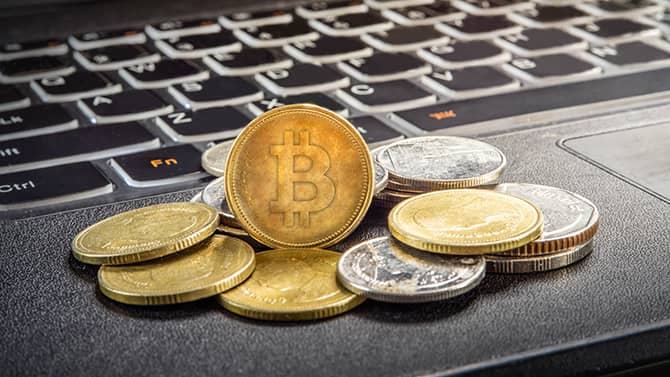
Stablecoins are cryptocurrencies designed to maintain a stable value, typically pegged to a fiat currency like the U.S. dollar. They aim to provide the benefits of cryptocurrency (like fast and low-cost transactions) without the volatility.
- Tether (USDT): Tether is one of the most popular stablecoins, pegged to the U.S. dollar on a 1:1 basis.
- USD Coin (USDC): USDC is another popular stablecoin, also pegged to the U.S. dollar and backed by fully reserved assets.
- Dai (DAI): Dai is a decentralized stablecoin, pegged to the U.S. dollar and maintained by a smart contract on the Ethereum blockchain.
Here's a quick comparison:
| Cryptocurrency | Purpose | Key Features |
|---|---|---|
| Bitcoin (BTC) | Peer-to-peer electronic cash system, store of value | Decentralized, secure, limited supply |
| Ethereum (ETH) | Platform for building decentralized applications and smart contracts | Programmable blockchain, smart contract functionality |
| Ripple (XRP) | Facilitating fast and low-cost international payments | Focus on financial institutions, fast transaction speeds |
| Tether (USDT) | Stable value, pegged to the U.S. dollar | Stability, used for trading and remittances |
Investing in Cryptocurrency: What You Need to Know
Investing in cryptocurrency can be exciting, but it's important to approach it with caution and do your research. The crypto market can be highly volatile, and prices can fluctuate dramatically.
Understanding Cryptocurrency Volatility
Cryptocurrency prices can be influenced by a variety of factors, including:
- Market sentiment: News, social media trends, and general investor confidence can all impact prices.
- Regulatory changes: Government regulations can have a significant impact on the crypto market.
- Technological developments: New technologies or updates to existing cryptocurrencies can affect their value.
- Supply and demand: The basic principles of supply and demand also apply to cryptocurrencies.
Risks and Rewards of Cryptocurrency Investing
Like any investment, cryptocurrency comes with both risks and rewards.

Risks:
- Volatility: Prices can fluctuate dramatically, leading to potential losses.
- Security: Cryptocurrency exchanges and wallets can be vulnerable to hacking.
- Regulation: The regulatory landscape for cryptocurrency is still evolving, and changes in regulations could impact the market.
- Scams: The crypto world is rife with scams, so it's important to be cautious and do your research.
Rewards:
- Potential for high returns: Cryptocurrencies have the potential to generate significant returns.
- Diversification: Cryptocurrency can be a way to diversify your investment portfolio.
- Decentralization: Cryptocurrency offers more control over your money.
- Innovation: Investing in cryptocurrency allows you to support innovative technologies.
Tips for Investing in Cryptocurrency
- Do your research: Before investing in any cryptocurrency, understand its technology, purpose, and potential risks.
- Start small: Don't invest more than you can afford to lose.
- Diversify: Don't put all your eggs in one basket. Spread your investments across multiple cryptocurrencies.
- Use a secure wallet: Choose a reputable and secure wallet to store your cryptocurrencies.
- Be wary of scams: If something sounds too good to be true, it probably is.
The Future of Cryptocurrency
Cryptocurrency is still a relatively new technology, but it has the potential to disrupt the traditional financial system and transform the way we think about money.
Potential Use Cases for Cryptocurrency
Beyond investing, cryptocurrency has a wide range of potential use cases, including:
- Cross-border payments: Cryptocurrency can facilitate fast and low-cost cross-border payments.
- Decentralized finance (DeFi): DeFi applications aim to provide financial services, like lending and borrowing, without intermediaries.
- Supply chain management: Blockchain technology can be used to track and verify goods throughout the supply chain.
- Digital identity: Cryptocurrency can be used to create secure and decentralized digital identities.
- Gaming: Cryptocurrency can be used to reward players and create new gaming experiences.

Challenges and Opportunities for Cryptocurrency Adoption
While cryptocurrency has a lot of potential, it also faces some challenges:
- Scalability: Some cryptocurrencies struggle to process a large number of transactions quickly.
- Regulation: The lack of clear regulations can hinder adoption.
- Education: Many people still don't understand cryptocurrency, which limits its adoption.
- Environmental concerns: Some cryptocurrencies, like Bitcoin, consume a lot of energy.
Despite these challenges, the opportunities for cryptocurrency adoption are vast. As the technology matures and regulations become clearer, we can expect to see more widespread adoption of cryptocurrency in the years to come.
Cryptocurrency and Taxes
Navigating the tax implications of cryptocurrency can be complicated, but here's what you need to know:
- Cryptocurrency is generally treated as property for tax purposes. This means that when you sell, trade, or otherwise dispose of cryptocurrency, you may incur a capital gain or loss.
- You're required to report your cryptocurrency transactions to the tax authorities. Keep accurate records of your purchases, sales, and trades.
- Different countries have different tax rules regarding cryptocurrency. Consult with a tax professional to ensure you're complying with the relevant regulations in your jurisdiction.
Conclusion: Embracing the Digital Revolution
Cryptocurrency is more than just a buzzword; it's a revolutionary technology with the potential to transform the world. While it comes with risks, the potential rewards are significant. By understanding the basics of cryptocurrency, you can make informed decisions and participate in this exciting new era of finance. So, dive in, do your research, and embrace the digital revolution!
Frequently Asked Questions (FAQs)
1. Is cryptocurrency safe?
Cryptocurrency transactions are secured using cryptography, making them very difficult to hack. However, cryptocurrency exchanges and wallets can be vulnerable to hacking, so it's important to choose reputable and secure platforms.
2. How do I buy cryptocurrency?
You can buy cryptocurrency on cryptocurrency exchanges like Coinbase, Binance, or Kraken. You'll need to create an account, verify your identity, and deposit funds.
3. What is a cryptocurrency wallet?
A cryptocurrency wallet is a digital wallet that allows you to store, send, and receive cryptocurrencies. There are different types of wallets, including software wallets (apps on your phone or computer), hardware wallets (physical devices), and paper wallets (printed codes).
4. Is cryptocurrency legal?
The legality of cryptocurrency varies by country. In many countries, cryptocurrency is legal, but regulations are still evolving. It's important to be aware of the laws in your jurisdiction.
5. What is cryptocurrency mining?
Cryptocurrency mining is the process of verifying transactions on a blockchain network and adding them to a new block. Miners are rewarded with cryptocurrency for their efforts.
6. What is the best cryptocurrency to invest in?
There is no "best" cryptocurrency to invest in. The best cryptocurrency for you will depend on your individual investment goals, risk tolerance, and research. It's important to diversify your investments and not put all your eggs in one basket.



![How to Buy Cryptocurrency: A Beginner’s Guide [2026]](https://discoverydell.com/wp-content/uploads/2026/01/how-to-buy-cryptocurrency-featured-image-768x434.webp)